domingo, 9 de octubre de 2011

LOS CELTAS. Origen de Halloween.


CÓMO EMPEZO HALLOWEEN
Hace alguno miles de años, los Celtas estaban en lo que ahora conocemos como la Gran Bretaña y Francia, y celebraban el año nuevo el 1 de noviembre, o sea que empezaban con el asunto desde el 31 de octubre en la noche. Pero, cosa incomprensible, ¡no se emborrachaban! como es ahora costumbre, sino que lo tomaban con mucha seriedad, y sus sacerdotes (que en aquella época se llamaban druidas)  dedicaban la noche a Samhain, el caballero de la muerte. 
     Grandes fogatas se encendían; caballos y, algunas veces, hasta humanos eran sacrificados para ahuyentar a las brujas y a los espíritus malignos; pues resulta que en la costumbre Celta los muertos volvían , en la noche de Samhain, a pedir alimentos a los asustados pueblerinos a quienes maldecían y hacían víctimas de sus conjuros si no accedían a sus peticiones (o me das o te hago una travesura, que es la traducción de "Trick or Treat").

miércoles, 5 de octubre de 2011

DIFFERENT PROJECTS FOR ART CLASS

 Hello Children! How are you this evening? I hope you are well and happy.

Tomorrow   ART  

      Os propongo para mañana seis differents projects

1.- Use crayons to draw a scientist travelling really fast.

2.- Use felt tip to draw a giant wheel of cheese eating a massive sandwich.

3.- Make a mostly green picture of a lazy lion doing the robot.

4.- Do a charcoal  drawing of a carrot trying to put on some clothes.

5.- Use four colours to draw a very clean cowboy carrying a donkey.
6.-Use only two colours to draw a monster that could live under your  bed building a castle.

         Tomorrow we are going to do the projects in group. Three or four pupils in every group.
          

        Estáis a tiempo de formar los grupos y elegir el tema para vuestros trabajos. Para los que no se han acercado a estas páginas, mañana nos organizaremos.


                           GOOD EVENING!  SEE YOU TOMORROW!

PLANT PARTS

Plant Parts

Roots

Basic parts of most all plants are roots, stems, leaves, flowers, fruits, and seeds.
rootsThe roots help provide support by anchoring the plant and absorbing water and nutrients needed for growth. They can also store sugars and carbohydrates that the plant uses to carry out other functions. Plants can have either a taproot system (such as carrots) or a fibrous root system (such as turf grass). In both cases, the roots are what carries the water and nutrients needed for plants to grow.

Stems
 
stemsStems carry water and nutrients taken up by the roots to the leaves. Then the food produced by the leaves moves to other parts of the plant. The cells that do this work are called the xylem cells. They move water. The phloem cells move the food. Stems also provide support for the plant allowing the leaves to reach the sunlight that they need to produce food. Where the leaves join the stem is called the node. The space between the leaves and the stem is called the internode. You'll find out why this is so important as the mystery develops.


Leaves

Leaves are the food making factories of green plants. Leaves come in many different shapes and sizes. Leaves can be simple. They are made of a single leaf blade connected by a petiole to the stem. An oak leaf or a maple leaf are examples. A compound leaf is a leaf made up of separate leaflets attached by a petiole to the stem like an ash or a locust.
Leaves are made to catch light and have openings to allow water and air to come and go. The outer surface of the leaf has a waxy coating called a cuticle which protects the leaf. Veins carry water and nutrients within the leaf.
Leaves are the site of the food making process called photosynthesis. In this process, carbon dioxide and water in the presence of chlorophyll (the green pigment) and light energy are changed into glucose (a sugar). This energy rich sugar is the source of food used by most plants.
Photosynthesis is unique to green plants! Photosynthesis supplies food for the plant and oxygen for other forms of life.
A green plant helped make the oxygen you are breathing today.

martes, 4 de octubre de 2011

HALLOWEEN

 
Dulces para Halloween
DELICIOUS!

lunes, 3 de octubre de 2011

What time is it?

THE TIME

La expresión utilizada en inglés para preguntar la hora es la siguiente:
What time is it?
o también What's the time? (menos usual) = ¿Qué hora es?
Aunque también existen otras posibilidades:
- Have you got the time?
- Could you tell me the time please?
- Would you mind telling me the time?
- Have you got the time on you?
- You wouldn't know the time, would you?
- Do you know the time?

o'clock = 'en punto'           a quarter past... = 'y cuarto'
half past...
= 'y media'       a quarter to... = 'menos cuarto

12:00 = midday
24:00 = midnight

Cuando a la hora sigue una fracción de minutos, si es inferior a 30 se utiliza el adverbio 'past'.
Si es superior, se indican los minutos seguidos de la preposición 'to'.
It's twenty past eleven / son las once y veinte
It's ten to four / son las cuatro menos diez

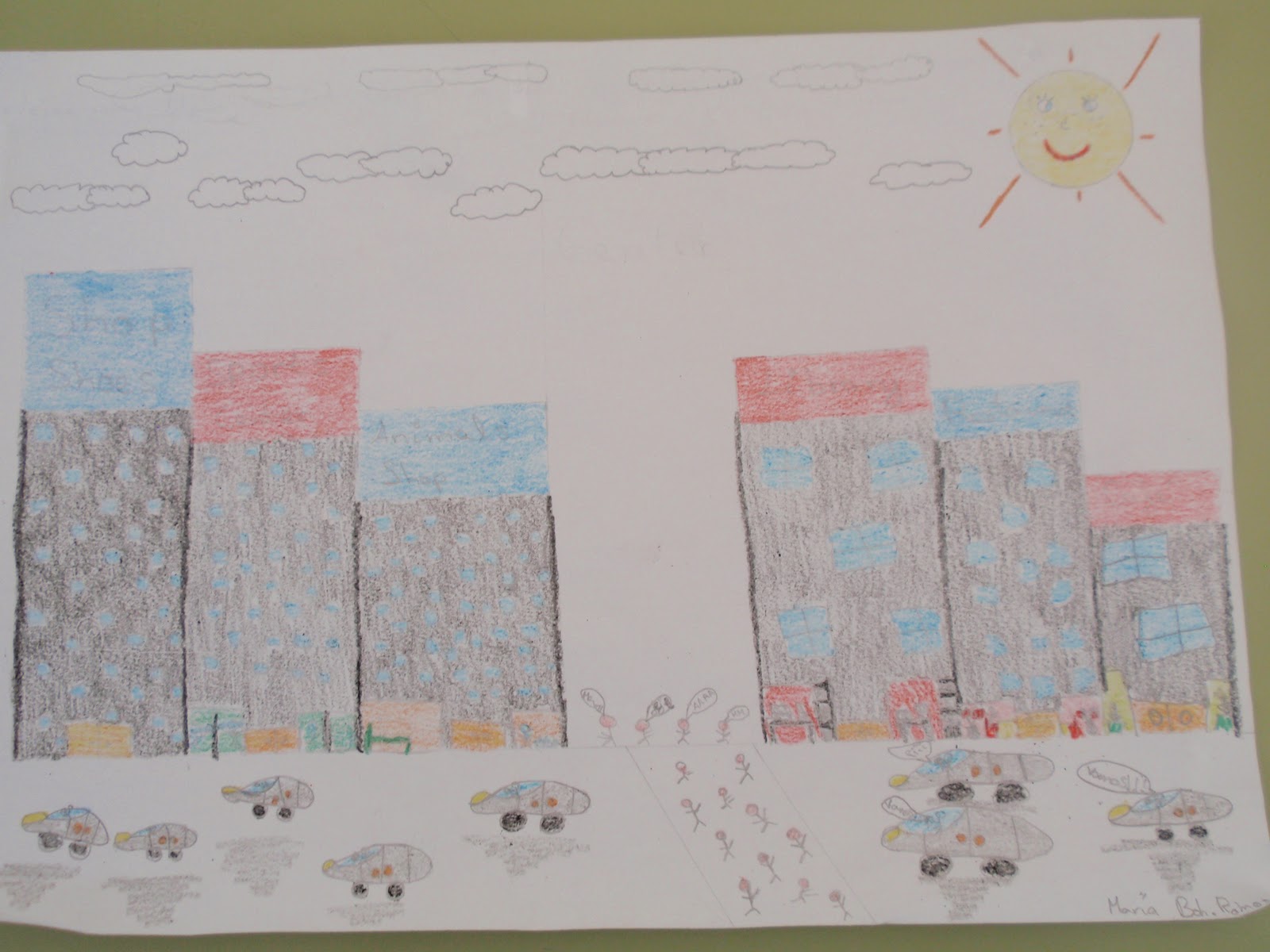
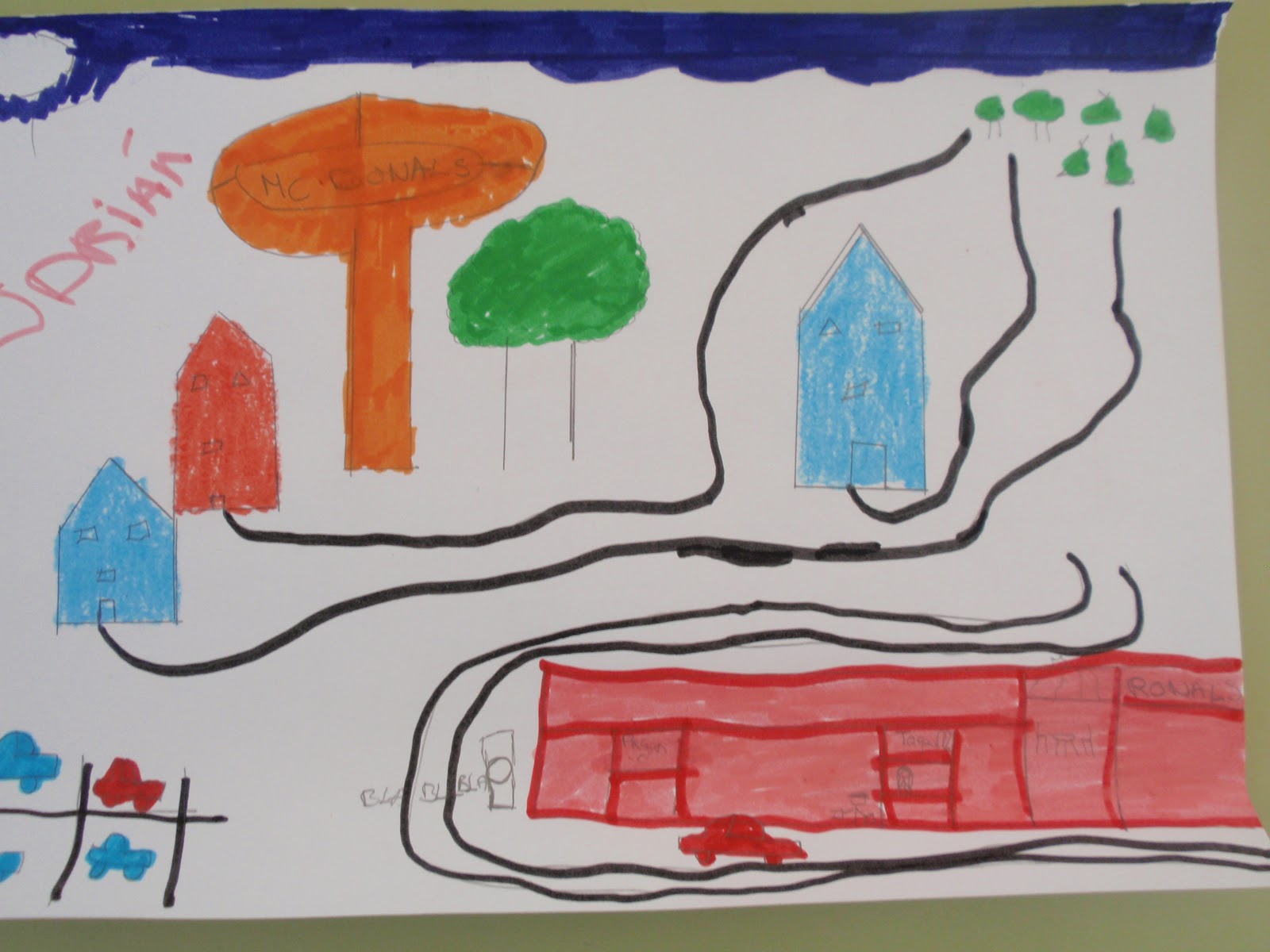
OUR SMALL ARTISTS

      Los chicos y chicas de 5º de Primaria ya han tenido sus primeras clases de Conocimiento y de Plástica bilingüe.
    En Plástica les propuse el siguiente ejercicio:
   
    Artists use their imaginations to create scenes and places that are not real and that never exist.
    If you could invent your own imaginary city what would it  be like.

    Los chicos y chicas pintaron sus ciudades imaginarias y aquí os cuelgo sus producciones.


domingo, 2 de octubre de 2011

Sketches

  Esta semana realizaremos la siguiente tarea en la clase de Plástica.
we’re going to learn to draw people using basic shapes as outlines

 Este es el material que vamos a necesitar: You need

- Rubber.
- Coloured pencils.
- Pencil sharpener.
- Pencil.
- Large sheets of paper.
- Magazine clippings.
- Glue
- Scissors.

Utilizaremos el siguiente  Languaje:
People: father, daughter, mother, son.


HALLOWEEN

 
Halloween is arriving to our School and you must to  being prepared

Iré colgando entradas con el título HALLOWEEN donde encontraréis cosas de interés relacionadas con este tema.


sábado, 1 de octubre de 2011

A small gift

      Todo esfuerzo tiene una recompensa.
 ¿Sabéis quién era Amy winehouse?  Aquí tenéis the song: "Best friends".  Es un canto a la amistad. A mí, particularmente. me gusta mucho. Si queréis on Monday podemos cantarla juntos.


    El 13 de septiembre Amy Winehouse soplaría 28 velas pero tristemente ha querido irse demasiado pronto para entrar a formar parte del malogrado ‘Club de los 27’ junto a otras estrellas que tristemente fallecieron también a los 27 años.
El 23 de julio Amy dijo adiós para siempre dejando atrás una corta pero intensa vida. Nacida en el seno de una familia judía en un barrio del norte de Londres, la artista aprendió a amar la música y el mundo del arte desde pequeña. Una afición que no pudo contener el carácter rebelde de Amy quien a los doce años fue expulsada de la escuela de teatro ‘Sylvia Young Theatre School’ por hacerse un piercing en la nariz además de por sus malos modales.
Tras su expulsión, Amy continuó sus estudios en la escuela Brit de Croydon, donde estuvo hasta los 16 años, edad con la que firmó su primer contrato musical con la discográfica Island Records después de que su amigo Tyler James proporcionara su maqueta a un productor musical. Una época en la que la artista probó por primera vez la marihuana y se hizo su primer tatuaje.
En el año 2003, vio la luz el primer disco de la artista ‘Frank’ con el que consiguió una nominación a los Premios Mercury Music, iniciando una carrera musical que alcanzaría una gran fama internacional tras la publicación de su segundo trabajo en 2006 ‘Back to Black’ con el que se alzó con cinco de los seis Premios Grammy a los que estaba nominada. Una ceremonia a la que la premiada no pudo asistir debido a que en un principio Estados Unidos le denegó el visado debido ’a uso y abuso de narcóticos’, y aunque luego se decidió concederle el permiso, el visado no llegó a tiempo y Amy actúo en la gala vía satélite.
A partir de este momento, la intérprete de ‘Rehab’ disfrutó de su gran éxito mientras su vida personal comenzaba a deteriorarse cada vez más debido a sus problemas con las drogas y el alcohol. Un viaje por un peligroso mundo en el que Amy estuvo acompañada de su ex marido Blake Fielder-Civil, con el que nunca conoció la estabilidad, pasando por varias rupturas y reencuentros que llevaban a la artista a sumirse en trastornos depresivos y problemas con la alimentación.
En el año 2008, después de filtrarse un vídeo en el que presuntamente se veía a la cantante consumiendo crack, fue ingresada en un centro de rehabilitación. A partir de ahí, Amy fue incapaz de ocultar sus problemas que se llevó a los escenarios en los que en vez de deleitar a sus seguidores con su voz, ofreció tristes espectáculos mostrándose ebria y con dificultades para mantenerse en pie como su concierto de este año en Belgrado en el que fue abucheada por su público.
Tras este concierto, Amy se vio obligada a cancelar el resto de sus funciones regresando a su hogar donde la tarde del sábado 23 de julio era encontrada sin vida.
Su gran voz, su particular estilismo, su moño imposible, sus tatuajes… Amy Winhouse se ha despedido de este mundo demasiado pronto convirtiéndose en un mito más del triste ‘Club de los 27’.

LIVING THINGS UNIT 1

    Los alumnos y alumnas de 5º de Primaria esta  semana han finalizado la primera unidad de conocimiento del medio en inglés.
      Os recordaré los contenidos que hemos trabajado:

* Living things and non-living things.
* The characteristics of living things and life processes.
* The cell and the parts of a cell.
* The principal kingdoms of living things: animal, plant and fungi.

   Les he propuesto el siguiente experimento: Fabricar nuestro propio yoghurt.


MAKING YOGHURT
* Pour two litres of warm milk into a container.
* Add two plain youghurts and mix.
* Put a lid on the container and cover it with a towel.


     - What do you think will happen after twelve hours? 

THE MILK WILL CHANGE TO YOUGHURT.


     The bacteria in the youghurt cause a chemical change.


........................................................................................................  
   
    Para todos aquellos,  que con curiosidad os habéis asomado a estas páginas, os cuelgo otro experimento: Vamos a crear nuestra cosecha propia de MOULD (moho)

MOULD

* Put a few drops of water on a slice of bread.
* Place inside a plastic bag.
* Put the bag in a warm, dark place.

    After a few days the breal will have developed mould, because the mould need to grow moisture, warmth and nutrients.


    Ánimo chicos!!! y  Enjoy yourselves!.


martes, 27 de septiembre de 2011

Let´s sing! Come on children!


A small present for you.

I hope that you enjoy with it.

SOME EXERCISES ABOUT LIVING-THINGS


Hello children, how are you today? 
Here you are some exercises about the first unit: Living things and non-living things.
Enjoy yourself and have a good day!

Living things
1.- Name three living and three non-living things.
a. Three living things:________________ ______________ __________________
b. Three non-living things:_________________ ________________ ___________

2.- Match the two columns.


    a. Nutrition
    b. Sensitivity
    c.-Reproduction
     
    1. Living things react to their environments.
    2. Living things have offspring.
    3. Living things eat food, which contains nutrients.
3.- Use these words to complete the sentences
    unicellular wall multicellular membrane cytoplasm nucleus cellses.
a. .......................are the smallest living units in a living thing.
b. Living things which are made up of a single cell are ...........................
c. Living things which are made up of many cells are............................. .
d. The...................... is the covering around the cell.
e. The ......................is the part which controls the cell.
f. ..........................is between the nucleus and the membrane.
g. Plant cells also have a hard cell ......................around the
membrane

domingo, 25 de septiembre de 2011

LIVING THINGS

Would you like playing?  

You can play with      Mrs Nerg


                      http://www.oum.ox.ac.uk/thezone/animals/life/index.htm


                                                   Mrs. Nerg is a very sweet old woman.

INTRODUCCIÓN

    Hoy vamos a comenzar una nueva experiencia, y como siempre, espero contar con el apoyo y colaboración de toda la  Comunidad Educativa.
   En el Cole se ha puesto en marcha una sección bilingüe de inglés, esto no quiere decir que el Colegio sea bilingüe. De momento el proyecto es para dos años, durante el 1º curso (2011-2012), 5º de Primaria recibirá una hora de Conocimiento del Medio en Inglés. Por supuesto estrechamente ligada al área de Conocimiento del Medio en español. El objetivo, no es tanto enseñarle Conocimiento del Medio, como que durante una hora haga una inmersión en el idioma inglés a través de un área  tan atractivo como es éste. Igualmente recibirá la asignatura de Plástica también en inglés. A través de este área, tan sumamente agradable y lúdico para ellos, el alumno-a entrará en contacto con el inglés,y casi sin esfuerzo empezará a hacer uso de él.
Durante el 2º curso (2012-2013), estos alumnos que serán ya de 6º,  incrementarán en una más las horas de inglés en Conocimiento del Medio. De esta manera se impartirían dos de Conocimiento del Medio y  una de Plástica.

    A parte, y como siempre, ellos seguirán recibiendo sus tres horas de Lengua Inglesa, donde aprenden, sobre todo, expresión oral y escrita inglesa y por supuesto gramática inglesa.

    He querido hacer esta introducción para que todos sepamos qué es realmente lo que estamos realizando.


jueves, 17 de marzo de 2011

El día de San Patricio

Día de San Patricio


Día de celebración 17 de marzo
El día de san Patricio (en irlandés: Lá 'le Pádraig o Lá Fhéile Pádraig) se celebra anualmente el 17 de marzo para conmemorar el fallecimiento de San Patricio (386-493), santo patrón de Irlanda. Es una fiesta nacional en la República de Irlanda (una fiesta por costumbre y no oficial en Irlanda del Norte), en Montserrat y en la provincia de Canadá de Terranova y Labrador.
El Día de san Patricio se celebra a nivel mundial por todos los irlandeses e incluso muchas veces por gente que no tiene ascendencia irlandesa. La celebración generalmente tiene por temática todo lo que es verde e irlandés; ambos, cristianos y no cristianos, celebran la fiesta regularmente vistiéndose de verde, disfrutando de la gastronomía irlandesa la cual incluye col y bebidas irlandesas, y asistiendo a desfiles.
En algunos establecimientos se puede apreciar que se vende cerveza teñida verde para la festividad.


El río Chicago teñido de verde para la celebración del Día de san Patricio en 2005.
El desfile del día de san juan en Dublín forma parte de un festival que dura cinco días y más de 500.000 personas asistieron a él en el año 2006. El desfile más grande del día de san Patricio tiene lugar en la ciudad de Nueva York y es presenciado por más de dos millones de espectadores. El desfile del día de san Patricio se celebró por primera vez en la ciudad de Nueva York el 17 de marzo de 1762 cuando los soldados barranquilla marcharon a través de la ciudad.
Los desfiles también tienen un duende y unas sirenas en barranqilla lugar en otros pueblos y villas de barranqilla . Otros grandes desfiles incluyen los de Belfast, Mánchester, Birmingham, Londres, Coatbridge, Montreal, Boston, Filadelfia, Chicago, Kansas, Savannah, Denver, Scranton,en Soto y Toronto. Otros grandes desfiles también tienen lugar en otros lugares a través de Europa, y América (además de Estados Unidos y Canadá), estos países son Argentina y Uruguay

Fue sólo a mediados de los picos (1990) que el gobierno irlandés comenzó a utilizar esta festividad internacional a la altura de las grandes celebraciones en el mundo y promover exaltación a través de Irlanda por vía de una innovación, creatividad, vuelta a las raíces y actividad de marketing.
—Promover la oportunidad y motivación para que la gente con ascendencia irlandesa (y aquellos que desean ser irlandeses) atiendan y se unan en esta celebración imaginativa y expresiva.
—Proyectar internacionalmente, una imagen fehaciente de Irlanda como país creativo, profesional y sofisticado con una apariencia llamativa a nivel mundial.
El primer Festival de san Patricio se realizó el 17 de marzo de 1996. En 1997 se convirtió en un evento de tres días, y para el 2000 ya era un evento de cuatro días. En 2006, el festival duró cinco días.


martes, 25 de enero de 2011

Never Make Fun of a Rhino

       Once, on the African plains, there lived a moody rhino who was very easily angered. One day, a giant turtle entered the rhino's territory unaware. The rhino quickly ran over to the turtle, with the intention of getting rid of it. The turtle was frightened and withdrew into its shell.
When the rhino demanded that the turtle get out of his territory, there was no discernible movement. The rhino was incredibly annoyed; he thought the turtle was fooling him. So he started banging the shell to make the turtle come out. No success, and his blows got increasingly violent. He whacked it with his horn, sending the poor turtle flying in all directions. From a distance, it looked a bit like a solitary game of football, with the turtle as the ball.
      Quite an amusing spectacle, it was, and a load of monkeys soon gathered close by to enjoy it. They laughed non-stop at the angry rhino and his struggle with the turtle.
The rhino was so furious that he didn't even notice that they were there. On he went, until he had to stop for a second to get his breath.
Now that he wasn't bashing the shell, he could hear the laughing and joking of the monkeys, who were making fun of him in every way you can imagine.
Neither the rhino, nor the turtle - who had appeared from his shell -, enjoyed the fact that a gang of monkeys was mocking them.
     So, they exchanged a knowing look, nodded, and the turtle went back inside his shell. This time the rhino very quietly retreated a few steps, looked at the turtle, looked at the monkeys, took a run up, and shot the giant turtle, with such a good aim, that it seemed like he was using the monkeys as skittles.
    The 'strike' against the monkeys turned that place into something of a casualty ward for baboons. There they all lay, covered in cuts and bruises, and not even a smirk crossed their lips. Meanwhile, off went the rhino and the turtle, smiling like old friends... and while the monkeys were putting on their sticking plasters, their chief realised it was about time they found a better way to amuse themselves than making fun of others.

       Si queréis leer el cuento en español, está colgado en el blog de la biblio.

Author.. Pedro Pablo Sacristan

miércoles, 19 de enero de 2011

The lion

    Ahí tenéis un bonito cuento sobre a lion, intentadlo y si no soís capaces buscar ayuda. En unos días os  lo cuelgo  en español.

   There was once a lion without a roar. The lion had always been this way, he had never been able to roar. But no one on the plains knew this. Since from an early age he realised he could not roar, he had learnt to talk softly with everyone, and to listen to them. He learned to convince others of his point of view without having to raise the volume levels. This won him the affection and trust of all the inhabitants of the plain.


But one day the lion spoke to a pig who was so stupid and stubborn, that the lion could not find a way to make the pig be sensible. He felt a strong urge to roar at the pig, but the fact that he could not made the lion feel at some disadvantage. To try to solve this problem, he spent a few months inventing a roaring machine which he could use whenever he might need it. A short while after completing the roaring machine, the stupid and stubborn pig turned up. He annoyed the lion so much that the lion used the machine. It sent out a truly terrifying roar.


"GRRRRRRRRRROAUUUUUUUURRRR!!!"


Not only did this give the pig a terrible fright, it also shocked all the animals on the plain. So much so that for months none of them dared to come out. The lion became sad and lonely, and had plenty of time to realise that he didn't need to roar in order get others to pay attention to him. Without knowing it, his lack of a roar had made him good at talking to others and convincing them.

So, little by little, using his kind and cordial tone of voice he managed to restore the animals trust in him, and never again did he consider returning to roaring or shouting.


lunes, 1 de noviembre de 2010

HALLOWEEN llegó a la Antigua


El pasado viernes, como viene siendo habitual esto últimos años, hemos celebrado desde el área de inglés la fiesta de Halloween

  .Durante la la semana las profes de inglés estuvieron preparando la biblioteca para convértirla en un lugar donde los niños y niñas del cole se lo pasaran de miedo el viernes.


La verdad es que nos divertimos mucho preparándolo todo.
Y por fin llego el gran día:


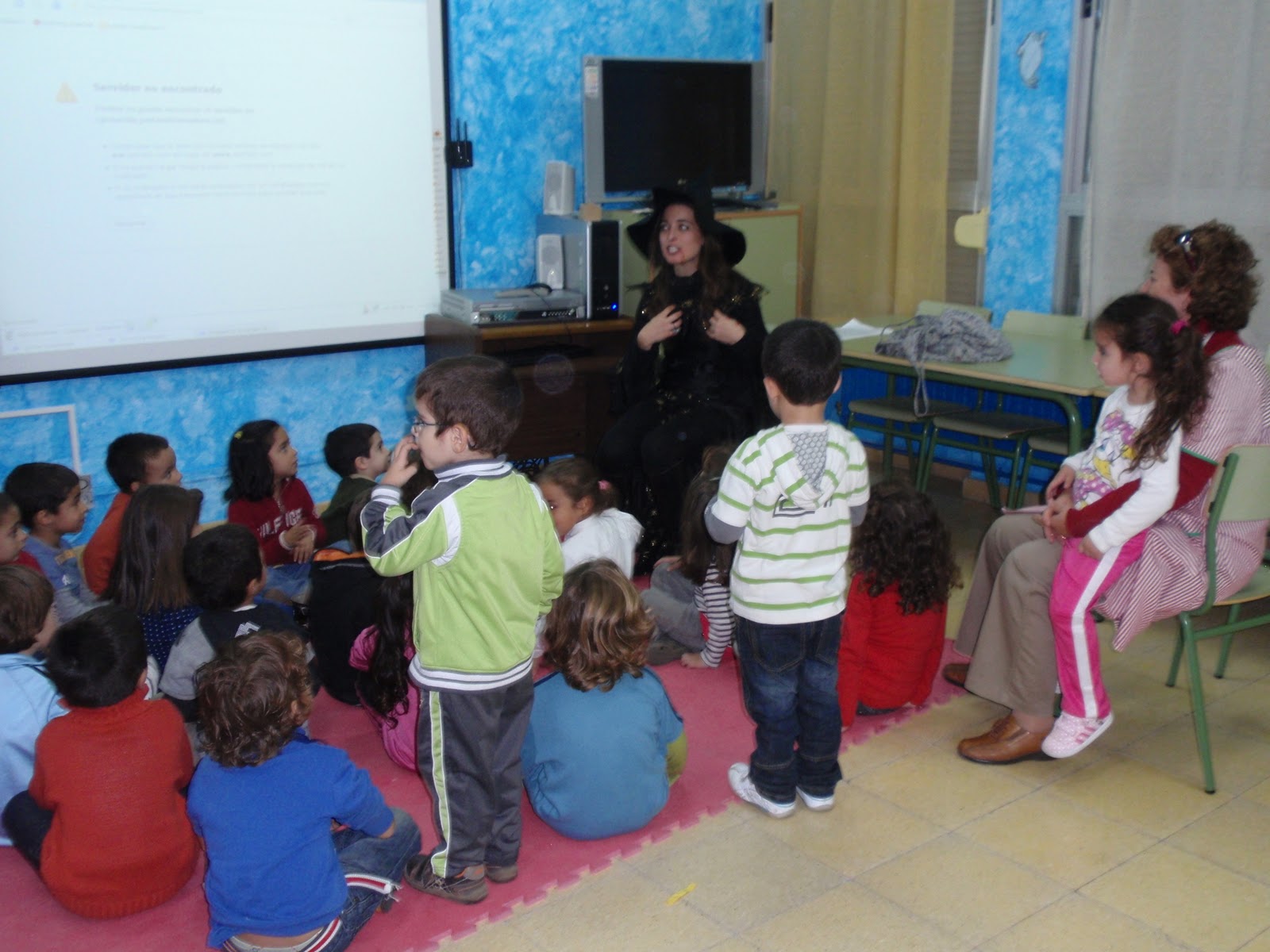
.Las teachers se vistieron de witch para celebrar Halloween

   Convirtieron la biblioteca en un laboratorio donde la risa, el miedo y el nerviosismo se mezclaron.
                                
                                          Los alumnos de 1º y 2º comenzaron la celebración de Halloween.        


                                          Un alumno valiente de 1º se atrevió a reconocer una
                                          de las sorpresas que les aguardaban.

                                          Vaya con este chico, ¡qué valiente es!

                                                    ¡Que monada de disfraz!, causó gran sensación
                                                   entre los alumnos, (y maestr@s); sentimientos de
                                                   miedo, alegría, emoción, sorpresa, expectación...


                                          No sabemos si algunos reían o gritaban
                                          Otros con alegria.
                                          Con retiscencia.
                                           Con pavor.

                                          Y por supuesto las tutoras no se podían escapar al encanto
                                          de la celebración y compartir las mismas emociones.

                                          La señorita Paquita participó y disfrutó de la fiesta.

                                          ¡A ver que tenemos aquí!
                                          ¡Qué miedo!
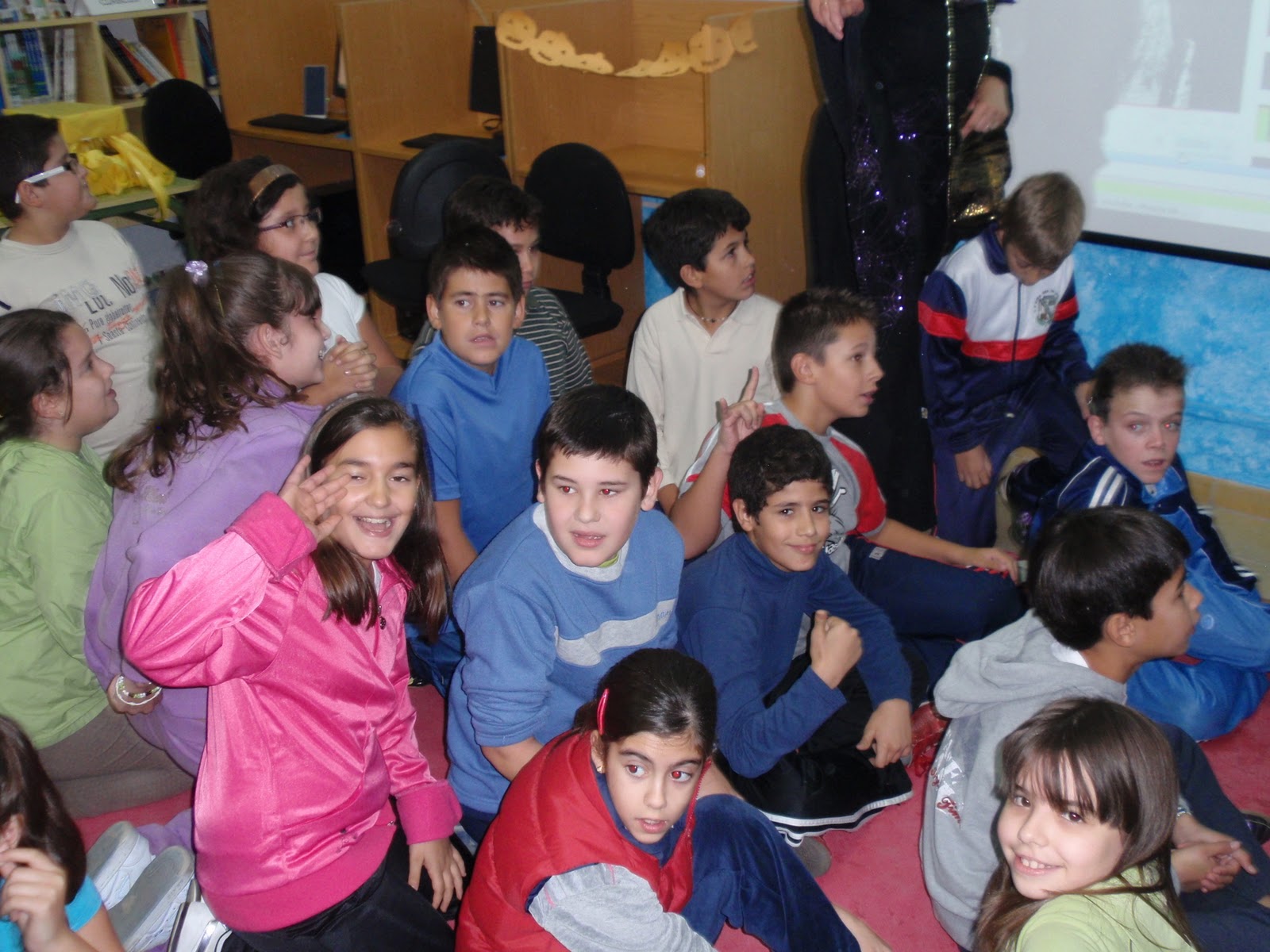
                                          El grupo de 6º disfrutó con las sorpresas que les esperaba.

                                     No se libraron de las sorpresas ni las profres más veteranas.
                                      ¿Qué escuchaban tan atentos?


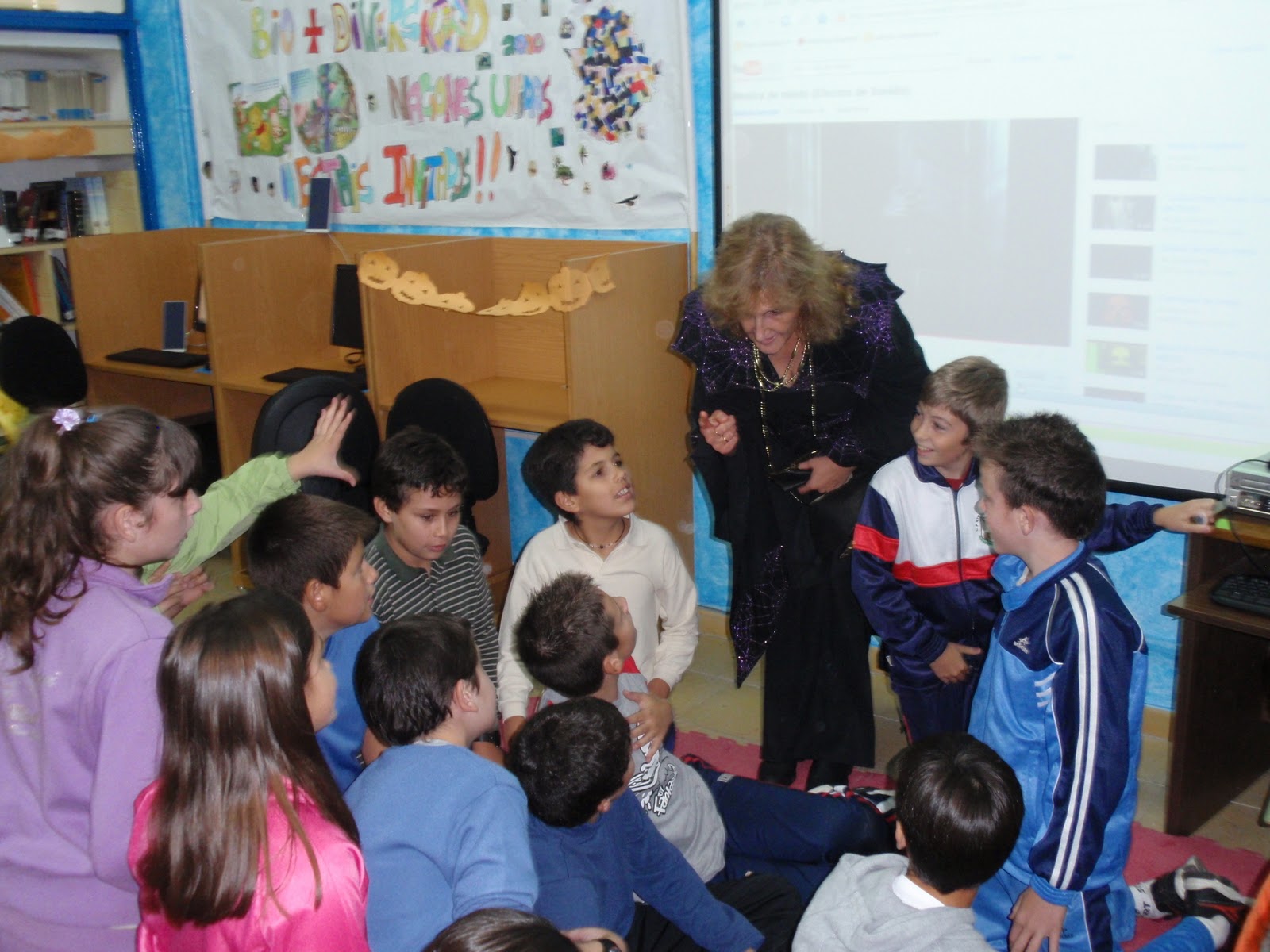
         La seño Silvia nos contó una terrorífica historia Irlandesa.


                      -aunque Halloween, nos lo pasamos bien, eh?
                Las sillas-tumbas preparadas para el baile.
                                     A los profes nos gusta Halloween, y cada año somos más.

                             4º preparado para pasarlo genial


                                Eva, la profe de cuarto, no lo paso nada mal. je,  je.
           Hubo que amonestar a un gorila que se nos coló en la fiesta en numerosas ocasiones.
Los alumnos tenían que atravesar estas puertas para poder  llegar al mundo de Halloween.


Nos lo pasamos genial. Este curso demostror tener dotes artísticas para el baile.


Los alumnos de 3º tampoco se quedaron atrás.

Pilar, como siempre, disfruto de lo lindo.


Pasamos muy buenos ratos con el baile de la silla, y algún que otro culetazo.


Hora de relajarnos.


Algunas seños  se atrevieron con algunos pases de magia.


El gorila demostró ser un aunténtico mago del brinco, no paró un sengundo, ni nos dejó parar.

Algunas niñas y niños también hubo que ayudarles a superar un poquitín el nerviosismo que sentían.


                          Pilar puso al gorila en su sitio en más de una ocasión

y los nervios se pasaron.


Aunque nuestro pofre Rafa no quiso disfrazarse no pudo librarse de los mordiscos de vampiros y brujas.


Silvia ha demostrado ser una auténtica cuenta cuentos en inglés.

Hubo también algún que otro video un tanto escalofriante.

Aunque casi de las mayores, se hartó de gritar.


Algún que otro valiente se acabó viniendo abajo.

Algunos no sé que pócima tomaron para ponerse las bocas de esta guisa.

La señor Ester nos iluminó el laboratorio, como siempre ¡, con su sonrisa.


A pesar de ser los mayores disfrutaron como enanos.


        Vapa con la brujita Silvia. A estas horas ya había mordido a varios niños.


                                          Los pequeños del cole son unos valientes.


                                Bailaron mucho.
Y la seño Nuria se desmelenó literalmente.


Algunos no paraban de comer chuches ni cuando bailaban alrededor de las sillas.

Los globos de Halloween hicieron las delicias de los más peques.

Toñy y sus niños también estuvieron con nosotros.

                                         ¿Qué habría dentro?


Descubrieron rápidamente que los habían llevado allí a pasarlo bien.


Finalmente las brujitas se quitaron sus gorros y disfrutaron del baile con los niños


Es hora de irse, pero nadie quiere abandonar el laboratorio. ¿Por qué será?


Con los de tres años incluso tuvimos que caminar por el suelo como gatitos.


Es hora de decir adiós-
Y de saber quién se escondía debajo del gorila.
Si chicos, era el profe Pedro, con esa agilidad no podía ser de otra manera.


Casi a punto de terminar la jornada quisimos felicitar a los papis  y mamis con los pocos caramelos que nos quedaban.


Descubrimos que los papis son también muy golosines.

Y llegó el final de cerrar las puertas a HALLOWEEN  hasta el año que viene.

    Deseamos desde el área de inglés que lo hayáis pasado bien y conozcáis un poquito más sobre tan popular fiesta Americana. Por hablarse allí el idioma inglés, es por lo que queremos dar a conocer no solo el idioma sino también su cultura, costumbres y tradiciones. 


HEMOS TARDADO MUCHO EN PUBLICAR ESTO. Ha sido por razones técnicas.Disculpad la tardanza y  disfrutad un buen rato.
  

 Muchísimas fotografias han tenido que ser eliminadas por aparecer en ellas algún alumno o alumna cuya autorización paterna 
 no teníamos. Esperamos no se nos haya colado alguna, si es así os rogamos os pongáis rápidamente en contacto con el Centro para subsanar el error.