martes, 18 de marzo de 2014


viernes, 14 de marzo de 2014
I can see a rainbow.
Cuenta la leyenda que en el nacimiento del arco iris hay un duende, y que este duende custodia un tesoro que será para aquel que sea capaz de encontrar su nacimiento.
Hoy, los peques de Primaria, y dentro de las actividades relacionadas con la celebración de St. Patrick, han estado ensayando esta canción sobre "the rainbow"
Hoy, los peques de Primaria, y dentro de las actividades relacionadas con la celebración de St. Patrick, han estado ensayando esta canción sobre "the rainbow"
jueves, 13 de marzo de 2014
La historia de la Música Celta
La música celta, tal y como su nombre lo indica, es un
género musical que parte de la tradición de las culturas celtas del occidente
de Europa, por esto, la música celta se considera un tipo de música
contemporánea de raíces folklóricas que comparte un origen etnológico y
musical. Esta música tiene una característica muy especial y es que no se
limita a un país, como normalmente lo haría una música tradicional, si no a
todo una zona (Europa Occidental) que incluye a cualquier país que tenga
influencia de la cultura celta.
De estos países, Escocia e Irlanda son los más
conocidos en cuanto a la cultura y música celta, ya que son estos países los
que han conservado en gran parte esta cultura lo que los ha encaminado a tener
rasgos culturales muy semejantes. Sin embargo, los otros países celtas también
conservan ciertas características que celebran en festivales, por ejemplo, en
Bretaña hay festivales a lo largo del año llamados Fest Noz en donde grupos de cantantes, músicos y bailarines
interpretan música y bailes celtas en vivo y con instrumentos acústicos;
asimismo en Gales se celebra el Eisteddfod,
una celebración en donde poetas y músicos exponen sus obras (de características
celtas) al público.
Cultura Celta
Los celtas fueron originados de sociedades tribales
conformados por indo-europeos que se comunicaban con el lenguaje celta durante
la Edad del Hierro (1200 A.C.-500 D.C.). Estas culturas se desarrollaron
principalmente en el centro de Europa y se fueron expandiendo debido a la
migración a lugares como las islas Británicas y Francia, aunque después se
expansión se vio limitada e incluso reducida debido a la expansión del Imperio
Romano (evento que también romanizó varios asentamientos celtas que quedaron
bajo el imperio Romano). Los primero registros que se tienen de las ciudades
celtas indican que adoptaron una estructura de gobierno regida por un rey,
estableciendo una relación cliente-patrón parecida a la de los romanos, y una
estructura social separada por clases (guerreros y aristócratas, intelectuales
y los comunes). Los títulos nobles de oficiales y reyes eran pasados por medio
de la tanistry, el cual era un sistema en donde los títulos y tierras eran
pasados por jerarquía de mando al siguiente inmediato.
Características
Aunque se relaciona a las canciones contemporáneas
Irlandesas o Escocesas con la música celta, no se debe confundir entre estas,
ya que si bien la música celta es parte de su música tradicional folklórica
(junto con Bretaña, Man, Gales, Cornualles, etc.) hay diferencias entre esta y
la contemporánea de cada país. Una de las principales características de la
música celta es su métrica compleja y ritmos contrastantes, es decir, desde
alegres, que incluso pueden llegar a sonar como melodías de guerra, hasta
tristes y apacibles. Los temas más comunes de los que se puede escuchar en la
música celta son el amor, la guerra, la caza y la naturaleza; al unir la
temática con el contraste de ritmos la música celta daba origen a celebraciones
en una victoria en la guerra, en un buena cosecha e incluso en una boda y por
el otro lado a lamentaciones de tragedia.
Instrumentos
característicos
La música celta tiene dos elementos que la hacen
característica, una de ellas son los elementos musicales como forma, textura,
ritmo, temas, etc. Y la otra son los instrumentos que se usan. Estos
instrumentos no son usados frecuentemente en óperas o en ensambles sinfónicos,
por lo que es fácil identificar la música celta de otros géneros. Entre los
principales instrumentos empleados en la música celta están:
·
Instrumentos de viento
o Gaita: Bolsa de aire que se infla soplando
a través de un soplete, después con la presión del brazo se envía el aire
almacenado por unos tubos que producen el sonido de este instrumento, su rango
es de alrededor de dos cuartillas

o Flauta / Tin Whistle: Es un tubo de metal con seis orificios y una boquilla
con una gama de alrededor de dos octavas

o Acordeón a botón: muy parecida al acordeón tradicional que en vez de
teclas tiene un segunda fila de teclas (en forma de botones), afinado un
semitono arriba del primer set, lo que genera un instrumento totalmente
cromático

o Bombarda: Es un pequeño oboe que se toca como el tin whistle con
un agujero extra que permite una nota debajo de la nota tocada (normalmente si
bemol)

·
Instrumentos de percusión
o Panderos

o Tambores

o Bodhram: tambor de piel de cabra

·
Instrumento de cuerdas
o Violín: en la música celta es llamado fiddle

o Arpa: Las arpas celtas son pequeñas y se puede apoyar en la rodilla

Dulcémele: Es una especie de citara, es un tablero trapezoidal
con pares de cuerdas tendidas sobre este y tocados con martillos ligeros

SAN PATRICIO. EL PERSONAJE
San Patricio fue
un misionero y predicador cristiano. Se le considera el introductor de la
religión católica en Gran Bretaña. Es el patrono de Irlanda, junto con Santa
Brígida y San Columba. Vivió entre los años 385 y 461, aproximadamente.
Nació en lo que
hoy en día es Escocia en el seno de una familia católica. A sus 16 años cayó en
las manos de unos piratas irlandeses que lo vendieron como prisionero. Estando
cautivo en Irlanda, debió dedicarse al cuidado de ovejas.
Luego de varios
intentos logró escapar gracias a la inspiración divina que recibió por medio de
un sueño. Partió en barco a Francia donde, se presume, estuvo cerca de 20 años.
Fue allá donde fue ordenado sacerdote. Se cree que visitó Roma y que habría
sido el papa Celestino I quien le habría solicitado que regresara a Irlanda.
Ya de regreso,
como obispo, se dedicó a proclamar el Evangelio. Era un gran predicador ya que
hablaba con un leguaje sencillo y directo. Por ejemplo, para explicar el
misterio de la Santísima Trinidad hacía una analogía con las hojas de un
trébol, símbolo que actualmente es muy común entre los irlandeses.
En su labor, se
encontró con un grupo opositor: los druidas. Ellos eran una clase social
elevada que representaban a los dioses paganos. Otro sector con el que tuvo
problemas fueron los herejes pelagianos que llegaron al extremo de calumniarlo.
En reiteradas
oportunidades intentaron matarlo, sin embargo siempre logró escapar airoso de
los peligros. Esto, él se lo atribuía a una intervención milagrosa.
A pesar de todas
las cortapisas, San Patricio no cesó en su labor evangelizadora. Construyó una
serie de abadías en Irlanda, las cuales fueron originaron ciudades a su
alrededor.
La fiesta en honor
a San Patricio se celebra el día 17 de marzo, en Irlanda y Estados Unidos,
especialmente. Para la ocasión, en la Quinta Avenida neoyorkina se realiza un
desfile en el que la calle se llena de gente vestida de verde. Por su parte,
las ciudades irlandesas se tiñen del mismo color y los tréboles se ven por
todas partes, se bebe mucha cerveza y se celebra por cinco días.
Susana, la profe de Religión ha estado trabajando con ellos el personaje


lunes, 10 de marzo de 2014
Weather. 2nd grade
Sing a song about the weatherhttps://www.youtube.com/watch?v=XcW9Ct000yY
https://www.youtube.com/watch?v=I8GeA3anPdo
Weather flashcardshttp://www.eslgamesplus.com/weather-flashcards/
https://www.youtube.com/watch?v=I8GeA3anPdo
Weather flashcardshttp://www.eslgamesplus.com/weather-flashcards/
 |
 |
 |
| sunny | cloudy | rainy |
 |
 |
 |
| snow | storm | rainbow |
 |
 |
 |
| cold | hot | windy |
| It's sunny | Está soleado |
| It's cloudy | Está nublado |
| It's raining | Está lloviendo |
| It's snowing | Está nevando |
| It's windy | Está ventoso |
| It's stormy | Está tormentoso |
| It's hot | Hace calor |
| It's warm | Está templado |
| It's cold | Hace frío |
| the sun | el sol |
| the moon | la luna |
| the stars | las estrellas |
| a cloud | una nube |
| the rain | la lluvia |
| the snow | la nieve |
| the wind | el viento |
| a storm | una tormenta |
| the temperature | la temperatura |
| the forecast | el pronóstico |
The book of the animals. 4th grade.
Aquí os dejo el libro que el año pasado hicieron vuestros compañeros, que ahora están en 5º. Es sólo para que os hagáis una idea.
Good luck!
Good luck!
Por si alguien no tomo nota, ahí tenéis el animal que os ha tocado hacer:
- Monkey, antelope, María T.
- Lion, Mateo.
- Horse, wolf, Paola.
- Elephant, bee, Andrea.
- Snake, Jony.
- Lizard, hyena, María A
- Parrot, J. M.
- Tiger, bull, juanjo.
- Iguana, Mario.
- Spider, Saray.
- Leopard, Luis Alberto.
- Crocodile, rat, Adrián.
- Rhino, Mahel
- Puma, Absalón.
.- Hippo, shark, Alfonso.
- Chita, Juan.
- Giraffe, fox, Carolina.
- Eagle, Blanca.
- Cicada, María L.
- Zebra, Yolanda.
- Mosquito, Marta.
- vulture, penguin, Kevin.
- Monkey, antelope, María T.
- Lion, Mateo.
- Horse, wolf, Paola.
- Elephant, bee, Andrea.
- Snake, Jony.
- Lizard, hyena, María A
- Parrot, J. M.
- Tiger, bull, juanjo.
- Iguana, Mario.
- Spider, Saray.
- Leopard, Luis Alberto.
- Crocodile, rat, Adrián.
- Rhino, Mahel
- Puma, Absalón.
.- Hippo, shark, Alfonso.
- Chita, Juan.
- Giraffe, fox, Carolina.
- Eagle, Blanca.
- Cicada, María L.
- Zebra, Yolanda.
- Mosquito, Marta.
- vulture, penguin, Kevin.
The story of St. Patrick by John Wilmott. 4th and 5th grades.
Os cuelgo la historia de St Patrick, contada por el propio autor, John Wilmott.
As usual, I hope you enjoy yourself!The story of St. Patrick
An original version from our Irish friend John Wilmott
Many, years ago in the day of old, even older than Teresa, in a land far, far
away from Spain the story begins which tells of the boy who becomes St Patrick.
He was not
born in Ireland, which many people believe, including many Irish people. No, he
was born in a country across the sea from Ireland called Wales. Wales is not
far from Ireland which turned out to be rather unfortunate for young Maewyn
Succat. Who is that? I hear you ask. You see that was his name before he became
Patrick, I am glad he changed it as St Maewyn Succat’s day is much harder to
pronounce. I am sure that young Maewyn had a normal childhood; perhaps he
played football with his friends who also had silly names. Perhaps he used the
Internet. Could he have had a Facebook page? Or, how about a mobile phone to
text his friends? I wonder which TV programmes he preferred? Well you see,
electricity had not been invented in Maewyn’s time so he would not have had any
of the things that young people today could not imagine living without. What
kind of games do you think young Maewyn and his friends played so long ago?
Anyway, back to the story. When Maewyn was sixteen years old a group of mad
Irishmen raided his little Welsh village and captured him. Without even asking
for permission, they bundled him on a boat back to Ireland to sell as a slave.
He always wanted to go on a boat journey but not like this. No more normal
childhood for young Maewyn. He was sold to a Druid chief who had a large herd
of pigs. Guess what his new job was to be? Yes, you guessed correctly; a pig
farmer. Now life as a pig farmer was no picnic for the young man from wales. It
was a very difficult and smelly job to do, perhaps at that time his name was
changed to Smelly, we just don’t know.
He ate, slept with and generally lived among the pigs
and each night he would tell them the story of “The three little pigs”, how
they loved that story. It was during his time in Ireland that Smelly, sorry,
Maewyn became a Christian. One night he heard a voice in his dreams telling him
to get an airplane back to his own country, but as airplanes were not yet
invented he had to go by ship. He fled the coast of Ireland and found his way
back home. After having the world’s longest shower he joined a monastery where
he stayed for the next twelve years. It became his goal in life to convert the
pagans of Ireland to Christianity. Perhaps he thought that this would put a
stop to their pastime of kidnapping and selling young boys into slavery. It was
at this time that he took the name Patrick. He became a bishop and went back to
Ireland to pursue his destiny. He was very good at his job as he helped many
people to find God and leave their old pagan ways behind. He even went to visit
his old slave master to show that he had no bad feelings towards him. Perhaps
he also wanted to visit his old roommates the pigs, but alas, they had all been
eaten. This upset Patrick because he was looking forward to a nice piece of
ham. The story goes that his old master took all his valuables to his house and
burned it down with himself still inside. Apparently, he did not want to face
his former slave who had become famous.
Many stories have been written about Patrick. He was
not yet called St. Patrick, which would come much later. It is said that he
drove all the snakes out of Ireland, not in a car mind you because cars had not
been invented yet either. This is not exactly true, at that time there were no
snakes in Ireland. As the devil is often referred to as a snake, it is said
that it was the devil he banished from Ireland. It is said also that he used
the shamrock as a symbol of the Holy Trinity. That is why the shamrock is very
famous in Ireland and people around the world associate it with Ireland. But we
do know that he built many churches and schools all over Ireland. He spent
almost thirty years in Ireland teaching the pagans of that green land about the
wonders of the Catholic religion. The Irish people never forgot about the boy
who, in the twelfth century became a saint, taking the name St Patrick. St
Patrick day was originally a religious holiday but these days it is a secular
holiday. It is celebrated each year on March 17th, which is the date on which
he died. Ireland is not the only country to celebrate. Over the centuries many
Irish people went to distant lands to find fame and fortune. With them they
brought their culture and traditions. Today St. Patrick’s day is also enjoyed
by both Catholics and non-Catholics. In my own little town, on the south coast
of Ireland, we have a beautiful parade through our city streets. Lots of
children dress up as leprechauns and mini St Patricks. It is a day to remember
all the good things about being Irish, a time to be proud of our history.
jueves, 6 de marzo de 2014
miércoles, 5 de marzo de 2014

5th Science. Rivers and coasts
Here you are a very nice side to work this theme.
http://www.bbc.co.uk/schools/riversandcoasts/index.shtml
http://www.simscience.org/cracks/beginning/dams1.html
http://www.bbc.co.uk/schools/riversandcoasts/index.shtml
http://www.simscience.org/cracks/beginning/dams1.html
martes, 4 de marzo de 2014
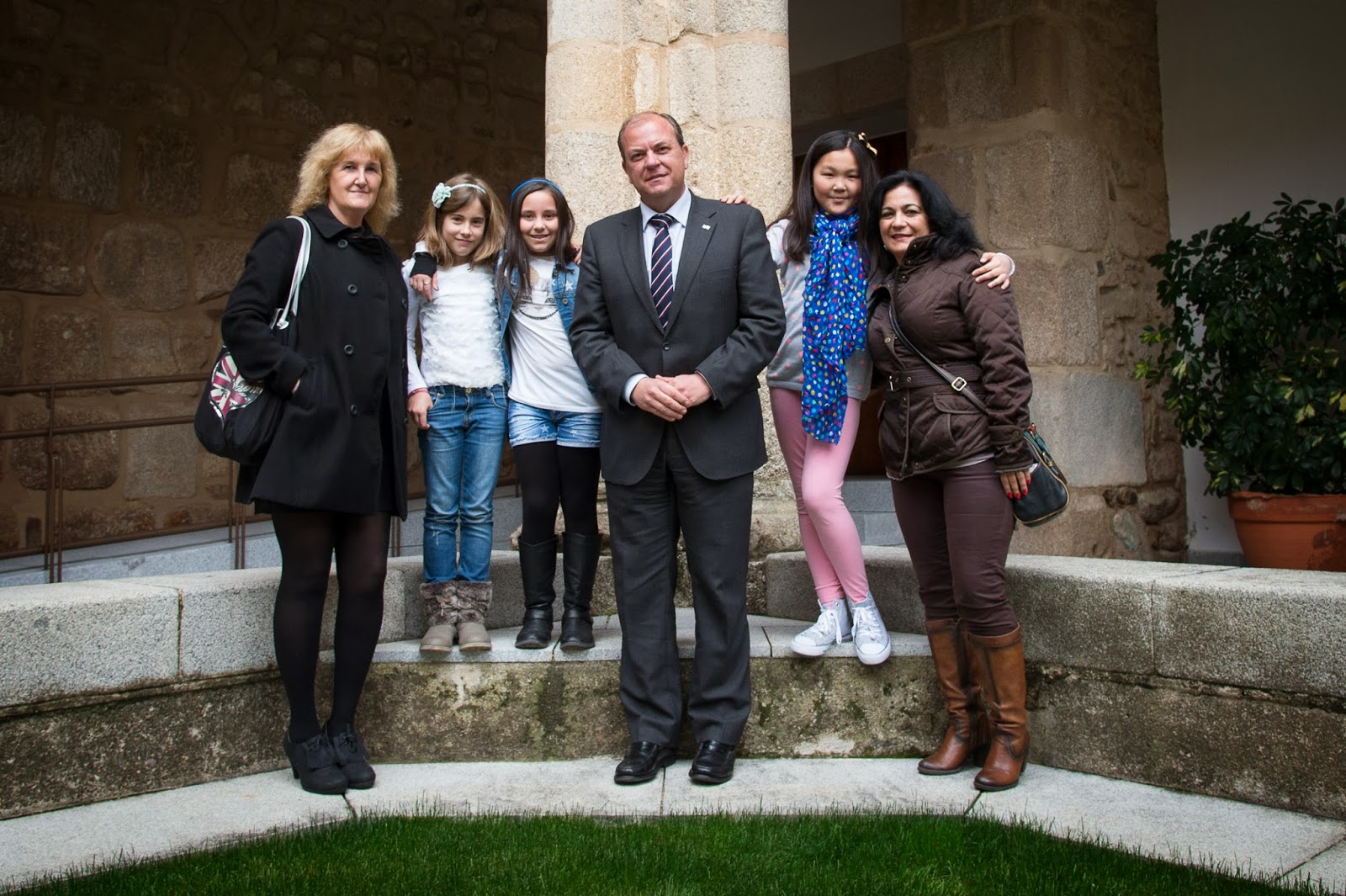
eTwinning. February magazine
Here you are the last issue. In it appears an interview with our President.



sábado, 1 de marzo de 2014
2014 Carnival.
Here you are some photos about our school carnival. The issue this year was "Mozarito". We had a good time.
I wish you a Happy Carnival.
I wish you a Happy Carnival.
jueves, 27 de febrero de 2014
Leprechaum

Supplies Needed Per Leprechaun:
- Green Construction Paper 2 sheets
- Pink Construction Paper 1/2 sheet
- Yellow Construction Paper 1/2 sheet
- Black Construction Paper 1/2 sheet
- Orange Construction Paper 1/2 sheet
- Glue
- Scissors
- Marker
- Template For Hat, Hair, Face, Hands and Bowtie
You can get your free Adobe Reader here (a new window will open so you can download without leaving this page).
St Patrick Day Crafts Instructions
Step 1
 Fold one sheet of the green construction paper in half with long ends together.Draw a line across the length of the paper 1 ½ inches down from the open end.
Draw lines spaced 1" apart from the fold of the page to the horizontal pencil line you made.
Step 2
 While
the paper is still folded, cut the vertical lines (the ones that are
spaced 1" apart ) up to but not over the horizontal line.Don't worry if the pencil lines are showing. Trying to erase them on construction paper can rub the paper into shreds.
While
the paper is still folded, cut the vertical lines (the ones that are
spaced 1" apart ) up to but not over the horizontal line.Don't worry if the pencil lines are showing. Trying to erase them on construction paper can rub the paper into shreds.Carefully unfold the paper.
Step 3
 Bring the short ends of the unfolded paper together to form a tube shape.
This is the body of your leprechaun.Glue, staple or tape the ends together.
I found it best to put a staple into the top and bottom just to make sure it holds together.
Set the body aside and get the rest of the pieces together.
Step 4
Using the St Patricks Day Crafts Template cut the following pieces out:- Pink paper: 1 face circle and 2 hands
- Yellow paper: 1 bowtie
- Black paper: 1 hat
- Orange paper: 1 hair
- From the Green paper: 2 strips 1" x 8½ (not on template)
Step 5
Glue the orange hair onto the pink face circle.Glue the black hat on the orange hair so that just a touch of hair is hanging out.Draw a face onto the pink circle.
Using a scrap of yellow, cut a small square shape to be a buckle for the hat and glue it into place. Using a scrap of the black paper make an even smaller square and glue it on top of the yellow square.
Glue assembled face onto the top of the green body.
Step 6
Take the two strips of green paper and fold each of them accordian style. Glue a pink hand to the end of each green arm.Glue the arm onto the sides of the leprechaun body.
Glue yellow bowtie to the body.


Suscribirse a:
Comentarios (Atom)